
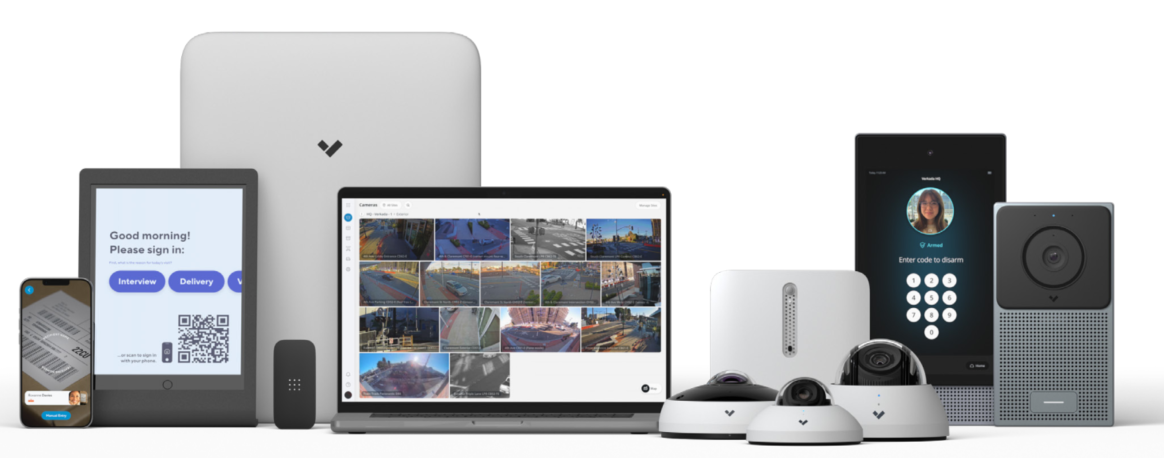
If you work in procurement for a Hawaii state department, county agency, or school, you have probably already been told that buying Verkada is easy — just ride an existing cooperative contract. That advice comes from mainland vendors, and in Hawaii it is wrong. Hawaii's procurement code handles cooperative purchasing differently than most states, and getting the path right at the start saves months. Here is how the pieces actually fit together in 2026, written by a Honolulu-based team that has been quoting Verkada for public buyers since 2020.
A note up front: this is general guidance for planning purposes, not legal or procurement advice. Your chief procurement officer and the State Procurement Office are always the authority on your specific purchase.
Can Hawaii agencies buy Verkada off a cooperative purchasing contract?
Yes — but not by piggybacking, which Hawaii does not allow. The State Procurement Office states the rule plainly on its Cooperative Purchasing Program page: "'Piggybacking' on existing contracts is not permitted." That single sentence trips up more mainland vendors than any other part of Hawaii's code, because piggybacking is exactly how cooperative contracts are sold on the continent.
What Hawaii does permit is a properly structured cooperative purchase under HRS 103D-802 and Hawaii Administrative Rules Chapter 3-128. A public procurement unit may participate in, sponsor, or administer a cooperative purchase with other procurement units — including external units located outside the State — provided the purchase meets SPO's requirements. Those include prior written permission from the chief procurement officer, a written agreement between the participating agency and the lead agency, public notice of the solicitation within Hawaii, and inclusion of the participating agencies in that public notice.
The practical takeaway: a national contract number is a starting point for pricing and terms, not a shortcut past your CPO. Build the CPO approval step into your timeline from day one, and remember that Hawaii has multiple CPO jurisdictions — the executive branch, the Department of Education, the University of Hawaii, the Judiciary, and each of the four counties among them — so the approving officer depends on who you work for.
Which contract vehicles carry Verkada in 2026?
Verkada is available to public buyers through a broad set of federal and cooperative vehicles, most of them consolidated under a single distribution partnership announced on January 21, 2026, when Carahsoft became Verkada's Master Government Aggregator. Through that arrangement, Verkada is offered on Carahsoft's GSA Schedule (47QSWA18D008F), NASA SEWP V, ITES-SW2, NASPO ValuePoint Master Agreement AR2472, TIPS contract 220105, OMNIA Partners, E&I Cooperative Services contract EI00063~2021MA, and The Quilt.
Verkada also holds its own OMNIA Partners public sector contract — number R250206, competitively solicited through Region 4 ESC in Texas, with an initial term of April 1, 2025 through March 31, 2028 and two one-year renewal options running through March 31, 2030.
Two cautions worth writing down. First, contract numbers get superseded; the January 2026 announcement referenced an earlier OMNIA number than the one currently posted, so always confirm the active number with the vehicle before citing it in a solicitation. Second, a NASPO ValuePoint master agreement is only usable in a state that has executed a participating addendum for it — verify Hawaii's status with SPO rather than assuming national availability means local availability.
What is a "unified electronic security system," and why does that term show up in bids?
A unified electronic security system, or UESS, is a single specification that covers cameras, door access control, alarms, intercoms, and sensors as one integrated platform instead of five separately bid systems. The term has been showing up in district- and agency-level solicitations because buyers learned the hard way what happens when each subsystem is procured on its own: five vendors, five dashboards, five support contracts, and no way to see a door-forced event and its video in the same place.
Specifying a UESS is the procurement equivalent of the problem Hawaii government agencies describe most often — a building with a camera system from one decade, an access control system from another, and an alarm panel nobody has the code for. Writing it as one system up front is usually cheaper over a ten-year horizon than stitching subsystems together later, and it makes the operations and training story far simpler for the people who actually run the facility.
What is the simplest path for a purchase under $100,000?
Small purchase procedures under HRS 103D-305 apply to goods and services under $100,000, and they require no fewer than three price quotations, with award going to the responsive and responsible vendor offering the lowest price or most advantageous quotation. For amounts from $15,000 to under $100,000, quotes may be solicited through HIePRO, the State's eProcurement system, or by publishing the solicitation.
The one rule to respect here is the prohibition on parceling: you cannot split a larger project into a series of small purchases to stay under the threshold. A twelve-building camera refresh is one procurement even if it gets deployed in phases. If your project genuinely is a single site or a pilot, though, the small purchase path is often the fastest way to get a working system in place and prove the platform before a larger competitive solicitation.
How should an agency write a spec that holds up?
Write to outcomes and capabilities rather than to a part number, and require the things that are genuinely hard to fake. Useful requirements for a modern cloud system include no on-premises video recorder or server, browser-based management with role-based permissions, full audit logging of who viewed which footage and when, configurable retention with automatic deletion, encrypted transport and storage, and hardware with a published warranty term. Verkada's Command platform received a FedRAMP "In Process" designation announced in January 2026 for its AWS GovCloud deployment, covering components including FIPS 140 validated cameras and sensors, Verkada Guest, Command Connector, and the Verkada Gateway — confirm the current status directly before writing any compliance designation into a spec, since these change.
If a brand-name specification is genuinely justified — standardization across an existing deployment is a common reason in Hawaii schools that already run Verkada on some campuses — document that justification in the file rather than leaving it implied.
Where does a local partner fit in?
Hawaii buyers consistently tell us the hard part is not the platform, it is everything around it: an accurate bill of materials, license terms that match the fiscal year, someone who can walk a Kalihi warehouse or a Hilo campus and count doors, and support that answers the phone in Hawaii Standard Time. That is the role Unified Security Partners plays — a locally owned Verkada Gold Partner in Honolulu, serving every island, handling system design, quoting, provisioning, training, and lifecycle support through our professional support services, with all on-site work performed by licensed contractor partners.
Frequently Asked Questions
Can a Hawaii agency piggyback on another state's Verkada contract? No. The State Procurement Office states that piggybacking on existing contracts is not permitted in Hawaii. A cooperative purchase is still possible under HRS 103D-802 and HAR 3-128, but it requires prior written permission from the chief procurement officer, a written agreement with the lead agency, and public notice of the solicitation within Hawaii.
Which cooperative contracts is Verkada on in 2026? Verkada is available through NASPO ValuePoint (Master Agreement AR2472), OMNIA Partners (contract R250206, solicited through Region 4 ESC), TIPS (220105), E&I Cooperative Services (EI00063~2021MA), The Quilt, and federal vehicles including GSA Schedule, SEWP V, and ITES-SW2 — most of them through Carahsoft, which became Verkada's Master Government Aggregator in January 2026. Confirm the active contract number with the vehicle before citing it.
What is Hawaii's small purchase threshold for security equipment? Under HRS 103D-305, small purchase procedures apply to goods and services under $100,000 and require at least three price quotations. Quotes for purchases from $15,000 to under $100,000 may be solicited through HIePRO. Splitting a larger project into smaller purchases to stay under the threshold is prohibited.
What does UESS stand for in a security solicitation? UESS stands for unified electronic security system — a single specification covering cameras, access control, alarms, intercoms, and sensors as one integrated platform rather than separately procured subsystems. Agencies use the term to avoid ending up with multiple vendors and dashboards that cannot share events.
Does Verkada meet federal compliance requirements for government buyers? Verkada announced a FedRAMP "In Process" designation in January 2026 for its Command platform hosted in AWS GovCloud, covering components including FIPS 140 validated cameras and sensors, Verkada Guest, Command Connector, and Verkada Gateway. Compliance statuses change, so verify the current designation before relying on it in a specification.
Planning a security procurement for a Hawaii agency, department, or school? Contact us for a no-cost site assessment and a budgetary quote you can take to your CPO — Honolulu-based, serving every island.