
If you're budgeting for security cameras at a Hawaii business, school, or agency, almost every price you find online comes from a mainland company that has never quoted a project in the islands. Here's an honest, Hawaii-specific look at what a commercial camera system actually costs in 2026, what's inside the per-camera number, and why cloud-managed systems are changing the math — from a locally owned Honolulu team.
How much do commercial security cameras cost in Hawaii?
Most Hawaii businesses should budget roughly $1,500 to $3,000 per camera for a complete cloud-managed system — covering the camera hardware, the annual cloud license, network readiness, and on-site work performed by licensed contractor partners. A typical small commercial property with four to eight cameras usually lands between $8,000 and $20,000 all-in for the first year, and larger sites — schools, warehouses, hotels, multi-tenant commercial real estate — scale from there.
That number surprises people in both directions — more than a hardware-store DIY kit, often less than enterprise horror stories suggest. What matters is understanding what's inside the figure, because two quotes that look alike can include very different things.
What's included in a commercial camera quote?
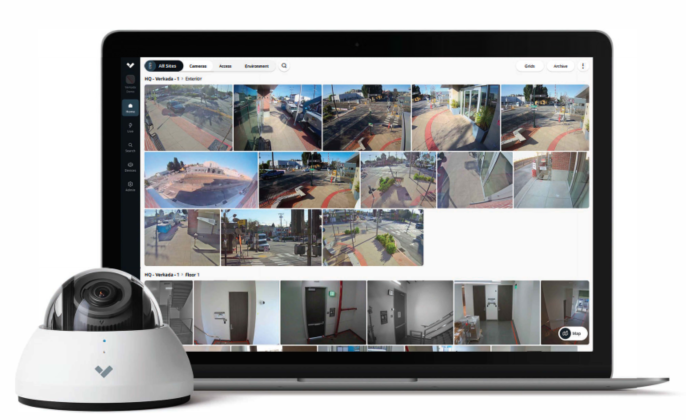
A complete project quote in Hawaii generally covers four things: the cameras, the cloud software license, network readiness, and on-site work. On a cloud-managed Verkada security camera system, here's what each one contributes.
The camera hardware is usually the largest single line item. Commercial models range from compact indoor domes in the $500–$800 range to 4K, multisensor, and weatherproof outdoor cameras built for salt air and tropical sun that run $1,000–$1,500 or more each. Verkada backs its cameras with a 10-year warranty — worth factoring in against cheaper cameras you may replace twice in that same window.
The cloud license replaces the old NVR box (and its failure-prone hard drives) with secure cloud storage and remote access. It's billed per camera per year — commonly a few hundred dollars, depending on how long you retain footage — and multi-year terms bring the annual rate down. This is the piece DIY comparisons leave out, but it's also what eliminates server maintenance, manual firmware updates, and the "the recorder was full for two weeks" problem.
Network readiness — PoE switches, cabling, and bandwidth upgrades — varies most by building: a modern office with structured cabling needs little, an older Honolulu building may need runs added.
On-site work — mounting and cabling — is performed by licensed contractor partners that USP coordinates. Island on-site rates run higher than mainland averages, and building type matters: an accessible drop ceiling is quick; a concrete downtown mid-rise or older Kaimuki storefront takes longer per camera.
What drives camera costs up or down in Hawaii?
Camera count, building construction, mounting height, and network readiness are the four biggest cost drivers on Hawaii projects. Exterior cameras that need a lift cost more to mount than interior domes; properties without cabling to camera locations need runs added; and multi-building campuses — common for schools and resorts — add trenching or wireless point-to-point links.
A few factors are unique to doing business in the islands. Inter-island shipping and logistics add freight and lead time to every hardware order. Salt air means outdoor-rated, corrosion-resistant housings at exposed coastal entries. And decades-old building stock across Oahu and the neighbor islands can make new cable runs impractical. One thing that helps: cloud cameras need just a single ethernet cable per camera — no coax home-runs back to a recorder closet — which can meaningfully cut on-site work in older buildings.
Is cloud-based cheaper than a traditional NVR system?
Over a five-year horizon, cloud systems are usually comparable or cheaper once you count the costs NVR vendors leave out of the quote. Traditional systems look cheaper on day one, but total cost of ownership includes NVR hardware replacement (hard drives fail — it's when, not if), server-closet space and cooling, IT time for updates and VPN access, and the cost of a failed investigation when footage was overwritten. Cloud systems trade those for a predictable annual license, automatic updates, and an alert the moment a camera goes offline.
There's also a Hawaii-specific angle: when a power surge or storm takes out a local recorder, you lose the whole system — but with cloud cameras, footage is already off-site and your other locations stay up. For after-hours coverage, cameras can pair with live video monitoring and threat deterrence — agents who see an intruder and respond in real time, not the next morning.
One cost that never shows up in a camera quote: false alarm charges. If your property also has a monitored alarm system, cameras double as verification sources so agents can confirm a real event before police are dispatched — which is exactly what Honolulu's alarm permit and false alarm fee structure penalizes when you get it wrong.
Can Hawaii businesses write off security cameras?
Yes — for tax years beginning in 2026, the IRS Section 179 deduction lets businesses expense up to $2,560,000 in qualifying equipment, which can include a commercial security camera system, in the year of purchase. That often means deducting the full hardware cost the same year instead of depreciating it. Confirm the specifics with your CPA, but it's a real reason many owners treat a camera upgrade as a smart end-of-year move.
How do I get an actual number for my property?
A free site assessment is the fastest path to a real quote, because every property is different and an honest partner needs to see your entry points, lighting, network setup, and coverage priorities before putting a number on paper. As a locally owned Verkada Gold Partner since 2019, Unified Security Partners designs the system, produces the specifications, coordinates the licensed installer, and supports it after go-live for businesses, schools, healthcare facilities, and agencies across all the Hawaiian Islands — and you'll get a line-item quote, not a mystery lump sum.
Want a real number for your property? Request a free assessment and budgetary quote — no pressure, island-style.
Frequently Asked Questions
How much does one commercial security camera cost in Hawaii? Typically $1,500–$3,000 as a complete first-year cost — hardware, cloud licensing, network readiness, and on-site work by licensed contractor partners — depending on the camera model, mounting location, and cabling required. Indoor domes sit at the low end; outdoor multisensor cameras at the high end.
Are there ongoing costs after the system is up and running? Yes — a cloud license billed annually per camera. It covers cloud storage, software and security updates, and remote access, with no NVR or server hardware to maintain, and multi-year terms lower the effective annual rate.
Does a Verkada camera system need an on-site recorder or NVR? No. Footage and management live in the Verkada cloud, so there's no NVR box or server closet to buy, house, or replace — you view every camera across every island from one dashboard on any phone or computer.
Do you charge for a quote or site assessment? No. Assessments and budgetary quotes are free anywhere in Hawaii, and you receive a line-item breakdown of hardware, licensing, and on-site work.
Can I reuse my existing cameras or cabling? Sometimes. Existing ethernet cabling can often be reused, which lowers cost. Most legacy coax cameras can't connect to cloud platforms, but many businesses phase the transition — replacing priority cameras first and migrating the rest over time.
Facts verified July 22, 2026. Pricing ranges are indicative; every project is quoted individually. Section 179 figures are general information, not tax advice — confirm with your accountant.