
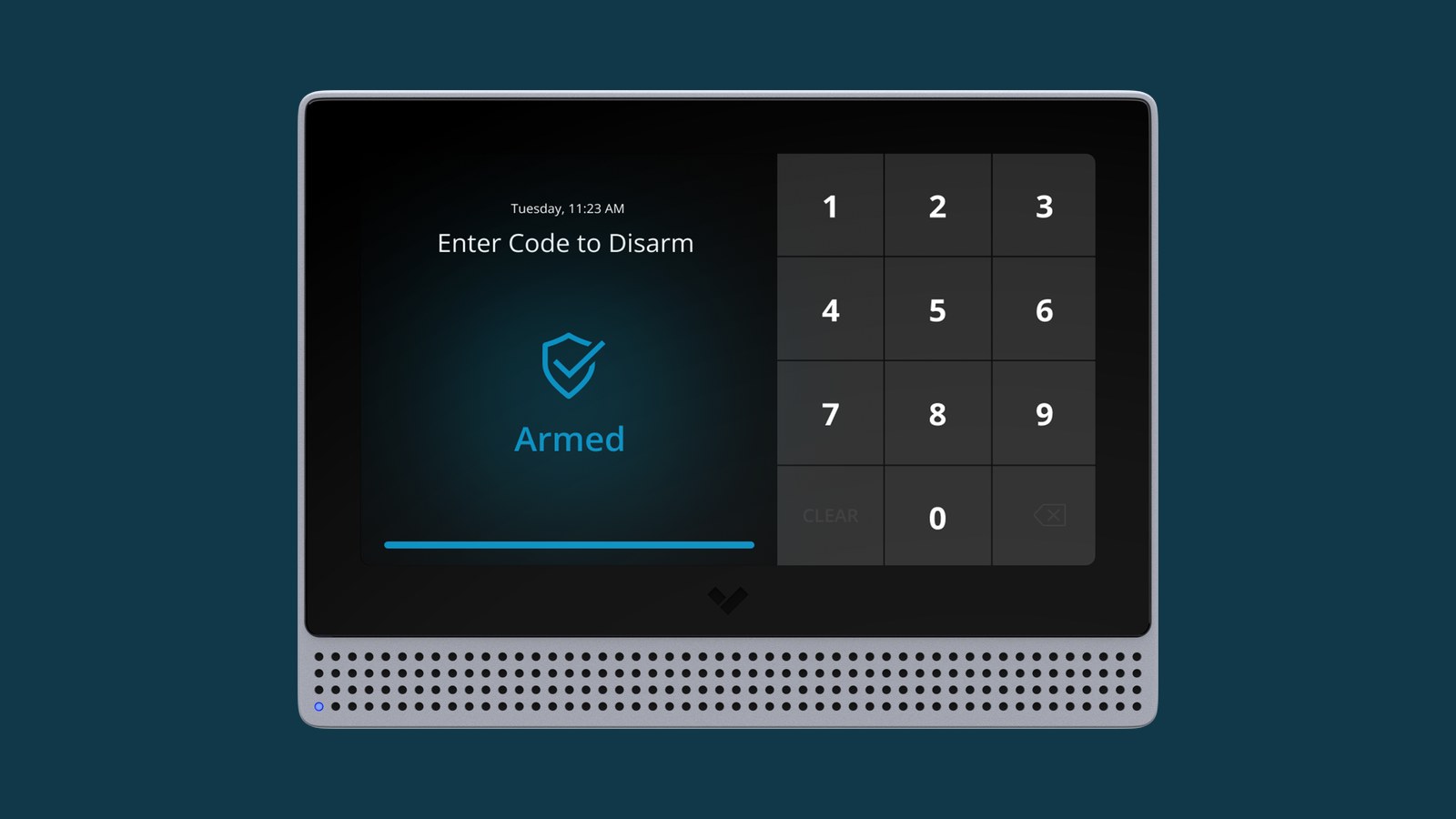
Quick answer: A legacy alarm tells a call center that a sensor tripped, and that is about all it knows. A Verkada alarm shows a monitoring agent live video of what tripped it, reports over internet with cellular backup, arms from a phone, a badge or a schedule, and includes 24/7 professional monitoring in the license. For a Hawaii business owner that means fewer false alarms, fewer fees, less daily hassle and a much better chance that police respond to a real break-in.
Most Hawaii businesses did not choose their alarm system. They inherited it with the building, or signed with whichever provider the last tenant used, and the panel on the wall has not changed much since. This guide compares that setup with the cloud business alarm systems in Hawaii USP designs on the Verkada platform, in plain terms: what it is like to live with each one, and what each one actually does when someone breaks in.
What counts as a legacy alarm system?
A legacy alarm system is a keypad-and-panel setup that reports sensor trips to a monitoring center, with no video and little or no remote management. You will recognize it by a few signs. The panel dials out over a phone line or a single communicator. Everyone shares one or two codes. Changing a user or a schedule means calling the provider and waiting for a technician. The monitoring is a separate contract, and many of those agreements run 36 to 60 months and renew on their own. None of this makes the equipment bad. It was built for a time when an alarm's only job was to make noise and place a call.
What is day-to-day life like with an old alarm?
It is mostly friction, and the friction is where false alarms come from. The opener forgets the code or fumbles the entry delay. Someone stays late and the closing manager arms the building around them. An employee leaves and the shared code never gets changed. When the owner is at home in Kailua wondering whether the Kapolei store was armed, the only way to find out is to call the manager.
A Verkada alarm removes most of those moments. Each person has an individual code or uses the same badge that opens the door when the alarm runs alongside access control systems in Honolulu. Sites can arm on a schedule, and the Command app shows the arm status of every location on one screen, so arming or disarming from a phone takes a few seconds. Every arm, disarm and alarm event is written to an audit log with a name attached. When a staff member leaves, you remove them in the app and they are out of the alarm, the doors and the cameras at once.
What happens when a legacy alarm goes off?
Usually a phone call, then a guess. The monitoring center sees "zone 4, motion" and calls the keyholder list. If nobody answers, or nobody can say what is happening inside, the center requests a police dispatch for an alarm that no one has verified. Most of those turn out to be false, and everyone involved knows it.
In Honolulu that has a direct cost. A police-dispatched alarm needs a permit, which is $15 to register and $5 a year to renew, and the City and County allows three false alarms in a 12-month period before charging $50 for each one after that. Our Honolulu alarm permit guide covers the details. The larger cost is harder to see: an alarm that cries wolf gets treated like it.
How is a Verkada alarm different when it trips?
The agent sees what happened before anyone is dispatched. When a door contact or motion sensor trips, the event arrives with video from your security cameras in Hawaii already attached. A trained agent in a UL-listed, TMA Five Diamond monitoring center reviews the live view and decides in seconds. If it is a staff member who came in early, you disarm from the app and the agent stands down, with no dispatch and no false-alarm charge. If it is a real intruder, the call to police is a verified crime in progress with a description of the person, which is a very different call from "zone 4, motion."
The cameras also work as sensors. Any Verkada camera can raise an alarm on a person detected after hours, and a horn speaker lets an agent or an automated message warn someone off before a door is ever forced. That is the step a legacy system cannot take, because it has no eyes and no voice.
Why does old alarm technology leave a business less secure?
Because it leaves gaps that a burglar, a storm or simple human error can walk through. Four of them come up again and again on Hawaii site walks.
- One way out. A panel that reports over a phone line or one internet path goes quiet when that path fails. Verkada panels report over ethernet with cellular backup and battery backup, so the system keeps reporting when a Kona storm takes out the power or the ISP.
- No verification. An unverified alarm tends to get a slower, lower-priority response, and after a few false alarms staff start ignoring it or stop arming the building at all. An unarmed alarm protects nothing.
- Shared codes and stale users. A code that ten former employees still know is not a control. Individual credentials and an audit trail are.
- Aging hardware nobody is watching. Old panels do not update themselves and often fail silently. Verkada devices update automatically from the cloud, show up in Command if they go offline and carry a 10-year warranty.
Is monitoring really included, or is that a second bill?
It is included. With Verkada, 24/7 professional monitoring is part of the annual alarm license, so there is no separate monitoring contract and no auto-renewing term to track. Traditional monitored service is usually billed monthly on top of the equipment, and our guide to business alarm monitoring costs in Hawaii walks through how the two models compare.
Do I have to tear out my existing alarm to switch?
Usually not. The Verkada BP52 panel accepts up to 32 wired zones and the BP42 accepts 10, so many existing door contacts and motion sensors stay on the walls and move to the new panel. Wireless sensors fill in where there was never any wire, which matters in older Honolulu buildings. Start by checking the end date and cancellation terms on your current monitoring agreement, since the switch is normally timed to that date.
USP designs the system, supplies the Verkada hardware and licensing, configures it, trains your team and supports it from Oahu. Physical mounting and cabling are performed by licensed Hawaii contractor partners. For lots and yards where the risk is outside the building, the same platform adds remote video monitoring in Hawaii on the perimeter.
If your panel is older than your lease, it is worth a 15-minute conversation. USP is a locally owned Verkada Gold Partner and has worked with Hawaii businesses since 2019, and we are glad to walk your site and show you what video-verified business alarm monitoring in Honolulu looks like next to the system you have now. You can also see the full alarm systems and monitoring lineup first.
Frequently Asked Questions
What is the biggest difference between a Verkada alarm and a traditional alarm system? Video verification. A traditional alarm reports that a sensor tripped, and a Verkada alarm shows a monitoring agent live video of the event, so police are called for confirmed intrusions instead of unverified signals.
Does a Verkada alarm need a phone line? No. The panel reports over your internet connection with cellular backup and battery backup, so it keeps reporting through an outage, and no phone line is required.
Can I keep my existing door contacts and motion sensors? In many cases, yes. The BP52 and BP42 panels can take over existing wired sensors, and wireless sensors cover any areas that were never wired. USP confirms what can stay during the site walk.
Will a video-verified alarm stop false-alarm fees in Honolulu? It sharply reduces the risk, because an agent screens out non-events before police are called. Honolulu allows three false alarms in a 12-month period on a permitted alarm and charges $50 for each one after that.
Is alarm monitoring a separate contract with Verkada? No. 24/7 professional monitoring is included in the annual alarm license, so there is one renewal per site instead of an equipment bill plus a monthly monitoring agreement.