
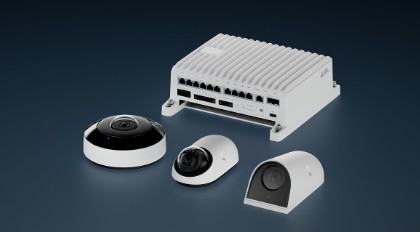
Quick answer: Verkada Transportation is a new vehicle camera system, announced September 16, 2026 and orderable November 30, 2026, that puts three ruggedized cameras and a 5G gateway on a bus, van or truck and brings the footage into the same Verkada Command dashboard a Hawaii organization already uses for its buildings. Footage is reviewed remotely while the vehicle is still on its route, incidents are found by clicking a point on the trip map, and driving events like speeding and harsh braking are flagged automatically. For Hawaii's school bus contractors, tour and shuttle operators and work fleets, it replaces "pull the DVR when the bus gets back to the yard" with a workflow that runs from a desk in Honolulu, Kahului or Hilo.
Hawaii moves a lot of people on wheels. Oahu Transit Services runs roughly 540 buses and 180 Handi-Vans for the City and County of Honolulu, Roberts Hawaii operates about 900 vehicles across four islands, and the Department of Education contracts hundreds of daily school bus routes to private operators. Add hotel and airport shuttles, tour coaches, crew vans, harbor yard trucks and county paratransit on the neighbor islands, and the vehicles carrying passengers or valuable cargo run into the thousands. Most have cameras of some kind; few have cameras anyone can use without going to the vehicle. This guide explains what Verkada's new fleet line changes, what the hardware is, and which Hawaii operations it fits, from a locally owned Honolulu team that has designed Verkada systems since 2019.
What is Verkada Transportation?
Verkada Transportation is Verkada's first product line built for vehicles rather than buildings: three cameras engineered for vibration, heat and pressure washing, one ruggedized gateway that powers them and connects them to the cloud, and a dedicated fleet view inside Command. It was announced on September 16, 2026 alongside the rest of Verkada's fall release, and Verkada lists it as available to order November 30, 2026 in the United States, Canada, Australia and New Zealand. Those dates are Verkada's and can shift.
The key idea is that a vehicle becomes just another site in Command. Video from the bus sits next to video from the depot and the school entrance, the same AI search works across the fleet, and the same face-blurring, role-based sharing and audit trail apply. No separate fleet portal, no DVR to pull.
Which cameras and gateway does the lineup include?
The launch lineup is three cameras and one gateway, all with Verkada's standard 10-year warranty. The KCF61-E fisheye is the cabin camera: a 12.5MP, 180-degree view that covers a full bus interior from a single ceiling mount, with a built-in microphone and 256 GB to 1 TB of onboard storage. The KCD41-E is a low-profile 5MP dome on a three-axis gimbal, used for driver-facing, door, aisle or stairwell views inside or outside the vehicle. The KCW41-E is the exterior camera: a 5MP wedge rated IP6K9K for high-pressure washdowns, with up to 2 TB onboard, for side, rear and stop-arm views. All three are IK10 impact-rated and operate from −40° to 50°C, and each keeps recording to its own storage even when the vehicle has no connection.
The KGX61 gateway is the hub, one per vehicle. It has ten LAN ports with PoE for up to ten cameras, 5G and LTE cellular with dual SIM plus eSIM failover, a Wi-Fi 6 client for offloading footage when the vehicle is parked at the yard, GPS, and OBD-II and J1939 connections for vehicle diagnostics. It is rated to MIL-STD-810H and SAE J1455 for shock and vibration and runs from −40° to 70°C. A separate WAN port allows a third-party uplink such as Starlink, which matters on routes where cellular coverage is thin.
How does GPS video search work on a route?
GPS video search means clicking a point on a vehicle's trip map in Command and immediately seeing what every camera on that vehicle recorded at that spot. When the vehicle is unknown, you enter an address and Command returns footage from every vehicle that passed by. For a Hawaii operator this collapses the most tedious part of an incident: a parent calls about something that happened "somewhere on the H-1 around 3:15," a guest reports a bag left on a shuttle, or a claim comes in about a mirror clipped on a Lahaina side street. Instead of scrubbing hours of DVR footage, a dispatcher finds the moment in seconds.
Driving events work the same way. Speeding, harsh braking, hard acceleration and sharp turns are detected automatically from the gateway's telematics and paired with the footage, so a claim can be audited with video, location and vehicle data in one report. Safety alerts, including fighting detection, slip-and-fall and person-of-interest matches, notify staff the moment they happen on any vehicle, which is the same AI alerting Hawaii schools already use on campus cameras.
Which Hawaii operations does this fit?
School bus contractors are the most obvious fit. The DOE contracts its routes to private operators, and every operator answers to parents, principals and the department when something happens on board. Cabin video that can be reviewed the same afternoon, with faces blurred for anyone not involved, is a materially better answer than "we'll pull the hard drive next week." Fighting detection on buses is a direct extension of what many Hawaii schools already run in hallways.
Tour, shuttle and paratransit operators are the second group. Airport and hotel shuttles, Waikiki tour coaches, Handi-Van and county paratransit contractors on the neighbor islands all deal with slip-and-fall claims, lost property and passenger disputes. Location-searchable video with driving-event context is exactly what an insurer or a county contract manager asks for. Hotels that run their own guest shuttles can put the vehicle in the same Command organization as the property's cameras and doors.
Work fleets round it out: crew vans, harbor and shipping-yard trucks, agricultural, utility and delivery vehicles. The exterior wedge is built for daily washdowns, and the fleet map shows every vehicle's live position across Oahu, Maui, Kauai and the Big Island on one screen.
What should Hawaii operators think about before buying?
Three things. First, connectivity: the KGX61 uses 5G and LTE on the road, but coverage on Saddle Road, the Hana Highway or Kauai's north shore is not urban Honolulu. Cameras keep recording onboard regardless and footage offloads over Wi-Fi at the yard, so the question is how much you need live versus after the fact, and whether a satellite uplink on the WAN port is worth it for specific routes. Second, audio: the cabin cameras have microphones, and while Hawaii is a one-party-consent state, operators carrying students or the public should decide with counsel whether to record audio and post notice if they do. Third, mounting and wiring: cameras and the gateway are installed on the vehicle by a qualified vehicle upfitter or licensed contractor partner. Unified Security Partners handles the design, camera placement plan, quote, Command provisioning, training and ongoing support, and coordinates with the installer, but does not perform the labor.
Every device needs a Command license, quoted with the hardware, and existing Verkada customers add vehicles to their current organization. USP can put together a fleet design now so an order is ready when hardware ships. See the Transportation & Fleet page for the full lineup, or request a quote.
Frequently Asked Questions
When can Hawaii businesses order Verkada Transportation? Verkada lists the line as orderable November 30, 2026 in the United States, Canada, Australia and New Zealand, with software features rolling out from October 8. Those dates are Verkada's and may change; USP can prepare a design and quote ahead of availability.
Do I have to bring the bus back to the yard to get footage? No. The KGX61 gateway streams footage over 5G or LTE while the vehicle is out, so an incident can be reviewed from a desk during the route. Footage is also stored on each camera and offloads over Wi-Fi at the depot, and the gateway can be woken briefly when the vehicle is parked and off.
Does it work with the Verkada cameras we already have at our school or depot? Yes. Vehicles are added to the same Command organization as your buildings, so fleet video, yard cameras, gate access and alarms are all searched and managed from one dashboard with one set of user permissions.
Is audio recorded on the bus? The KCF61-E fisheye and KCD41-E dome have built-in microphones; the KCW41-E exterior wedge does not. Audio can be enabled or disabled per camera. Hawaii allows recording with one party's consent, but operators carrying students or the public should confirm their audio policy with counsel and post notice.
What happens to the footage if the vehicle is in a collision? Video is processed and saved up to the moment of impact, even if the vehicle loses power, and the footage is stored on the camera and synced to the cloud rather than on a single DVR that may be damaged.