
Quick answer: Cloud access control replaces a condo's fobs and master keys with encrypted cards, fobs or phone credentials the resident manager issues and cancels from a dashboard in seconds. A lost fob is turned off instead of the building being re-keyed, copied prox fobs stop working, and every lobby, garage, elevator and amenity door leaves an audit trail. Most Hawaii buildings keep their door hardware and wiring and phase the changeover one entrance at a time.
Every Hawaii AOAO board has had the conversation. A fob went missing, nobody knows how many copies of the mailroom key exist, and a new owner was handed a ring of keys from three owners ago. The old answer was a locksmith and a special assessment. The current answer is cloud access control systems in Honolulu and across the islands, which USP has designed for condo towers, walk-ups and gated communities since 2019. Here is how the changeover works and what a board should ask before approving it.
Why do condo fobs keep turning into a problem?
Because most of them were never secure to begin with. The grey or blue fobs handed out by many Honolulu buildings in the 2000s and 2010s are 125 kHz proximity fobs, which broadcast an unencrypted number that can be copied in minutes at a kiosk or with a tool that costs less than lunch. Once copies exist, the building has no idea how many are in circulation, and deactivating the original does nothing about the clones. Add in fobs that were never collected from former tenants, short-term guests and departed cleaners, and the fob system quietly stops meaning anything.
Keys are worse. A master key system is only as secure as the last person who lost one, and the fix is re-keying every cylinder it opened. For a tower with lobby, garage, pool, gym, trash rooms and mechanical rooms, that is a locksmith visit, a new set of keys for every unit and staff member, and a few weeks of complaints.
How does cloud access control replace fobs and keys?
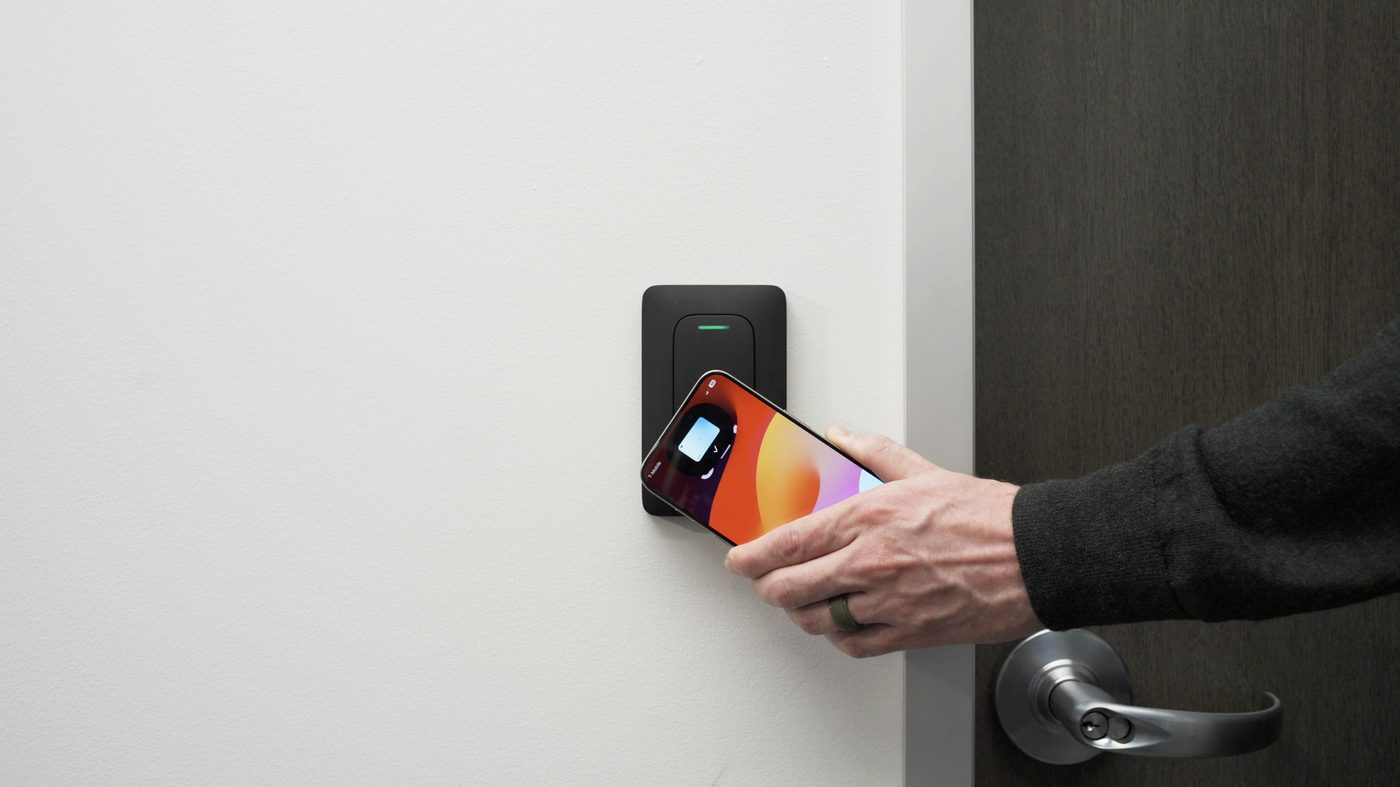
It replaces the credential, the lock controller and the recordkeeping at once. Residents receive an encrypted key card or fob, or a mobile credential in Apple Wallet or on an Android phone, and the resident manager issues, schedules and cancels every one of them from Verkada Command on a computer or phone. A lost credential is revoked in seconds and the audit trail shows the last door it opened. The encrypted credentials use MIFARE DESFire EV3 chips with AES-128 encryption, which the cheap copying kiosks cannot clone. Our access credentials page walks through each option.
For the building, that means no more re-keying, no more guessing how many fobs exist, and a record of who entered the garage at 2 a.m. when a car gets broken into. For the resident, it usually means a phone replaces the fob, with a card as the fallback for anyone who prefers one.
Can residents keep their current fobs during the changeover?
Often, yes, for a while. Multi-technology readers and cards let the old prox fobs keep working at doors that have not been converted yet, so a board can move the lobby first, the garage next and the amenity doors after that, without a single flag day where 300 residents line up for new credentials. Once every door is on the new system, the old fobs are retired and the clones go dead with them.
The same applies to the door hardware. Verkada controllers work with most existing electric strikes, maglocks and standard Wiegand or OSDP readers, so many Hawaii buildings reuse their cable runs and swap an aging panel in the electrical room for a cloud controller. Interior doors such as the trash room or a storage cage can use battery-powered wireless locks, which avoids running new wire through finished walls.
What about the garage gate, elevators and amenity doors?
They go on the same system, with their own rules. The garage gate reads the same credential as the lobby, so a resident whose fob is cancelled loses the garage at the same moment. Elevator control through the Verkada AX11 lets a credential call only the floors the resident is allowed to reach, which is how a tower keeps a guest from riding to the rooftop deck. Amenity doors get schedules: the pool opens at 7 a.m. and locks at 10 p.m. without anyone walking down to do it, and a resident who has been suspended from the gym for a house-rule violation simply loses that door and nothing else.
How do boards handle tenants, guests, vendors and cleaners?
With time-limited credentials and an audit trail. A tenant's credential can expire on the lease end date. A visiting family member can be issued a phone credential for a week. A cleaning company or elevator vendor gets access to the doors it needs during the hours it works, and the manager can see when each one came and went. Paired with a video intercom at the lobby, a resident can see and buzz in a guest from a phone without handing over a fob at all.
What happens if the internet goes down?
The doors keep working. Verkada access controllers store credentials, schedules and rules on the device itself, so a lobby reader still recognizes residents during an outage and syncs the audit log when the connection returns. That matters in Hawaii, where a storm can take a building's internet down for a day. The fire alarm interface on the controllers also releases doors when the building's fire system trips, which the association's fire inspector will want to see in the design.
What does an AOAO access control project look like?
It starts with a site walk to count doors, check the existing hardware and look at where the building's network reaches, then a written design and proposal the board can take to a meeting. Many Hawaii boards phase the work across fiscal years to fit the reserve budget, and USP presents to boards regularly, so questions about who owns the hardware, what the annual license covers and how residents get their credentials are expected. USP designs the system, supplies the Verkada hardware and licensing, configures every reader and credential before go-live, trains the resident manager and supports the system for its life. Physical mounting and cabling are performed by licensed Hawaii contractor partners. Our door access control cost guide covers what drives the per-door number up or down.
One more thing boards ask about: pairing access control with security cameras in Hawaii at the same doors. Our guide to condo security camera rules in Hawaii covers where cameras are allowed in common areas, and the two systems share one dashboard, so a door event and the video of it sit side by side.
If your building is still issuing fobs that can be copied at a kiosk, or still re-keying every time a master key disappears, key card access control in Hawaii on a cloud platform is the fix, and a Honolulu team can walk the building with your manager. Boards on the neighbor islands get the same design and support, and if you manage a tower in town, our Honolulu security systems page covers everything else USP does for condos and AOAOs, including how condo and AOAO boards use access control across the islands.
Frequently Asked Questions
Can a condo stop residents from copying fobs? Yes, by moving to encrypted credentials. The common 125 kHz proximity fobs can be cloned at kiosks because they carry no encryption. Encrypted DESFire EV3 cards and fobs, and mobile credentials on a phone, cannot be copied that way, and the readers can be set to reject old prox fobs once the changeover is complete.
Do residents have to use their phones? No. Mobile credentials in Apple Wallet or on Android are an option, and encrypted cards or fobs remain available for anyone who prefers one. Both work at the same reader.
Does the whole building have to switch at once? No. Multi-technology readers let old fobs keep working at doors that have not been converted, so boards usually phase the lobby, garage and amenity doors across a few months or fiscal years.
Who approves a change like this in a Hawaii condo? Typically the board, within the authority the bylaws and house rules give it, and some associations put larger projects to the owners. Hawaii's condominium law and your governing documents control, so boards should check with the association's attorney and property manager on the approval path.
Can we add access control to the garage gate and elevators, not just the doors? Yes. The garage gate reads the same credential as the lobby, and elevator floor control limits which floors a credential can reach. Amenity doors such as the pool and gym get schedules and can be revoked per resident.