
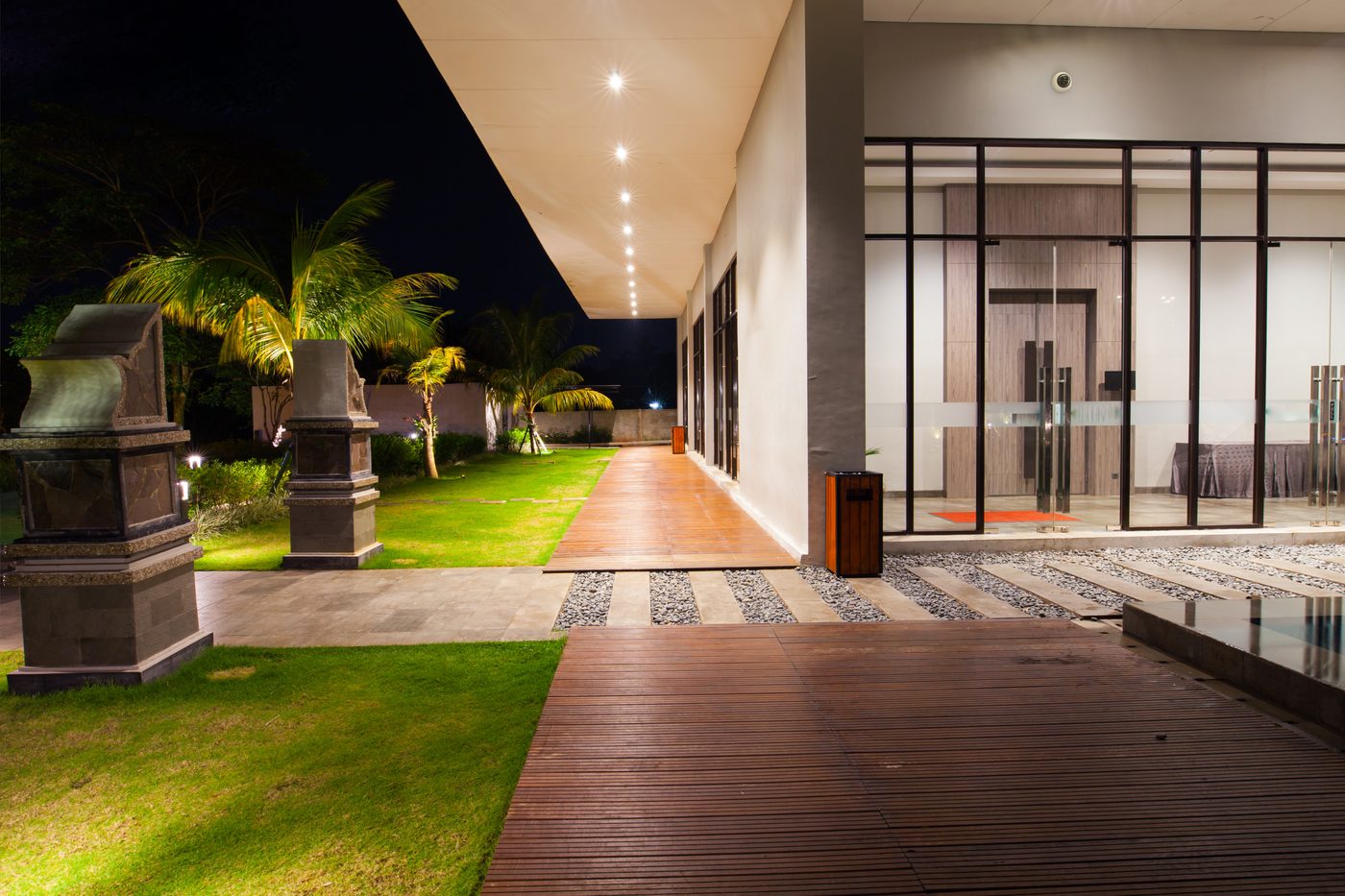
Quick answer: A Hawaii AOAO board can generally place security cameras in true common areas — the lobby, parking garage, elevators, mailroom, pool deck — but never anywhere a person has a reasonable expectation of privacy, and never aimed into a unit. The two traps that actually catch boards are audio (Hawaii's wiretap law treats recorded conversations far more strictly than video) and process (cameras on common elements are an association decision that should follow your declaration, bylaws, and house rules). Post notice, adopt a written footage policy, and have your AOAO's attorney review it before anything goes up.
Honolulu is one of the most condominium-dense cities in the country, and every Hawaii condo is governed by an association of unit owners — the AOAO — under HRS Chapter 514B. So when a break-in hits the garage or packages vanish from the mailroom, the question lands on the board: can we put cameras up, where, and what can we do with the footage? Here's the plain-English version, written for directors, not lawyers. (General information, not legal advice — run your final policy past the association's attorney.)
Can our AOAO board install security cameras in common areas?
Generally yes — common elements are the association's to manage, and security cameras covering the lobby, parking structure, elevators, mailroom, trash rooms, and pool deck are a normal, expected part of running a Hawaii condominium. Hawaii has no law prohibiting video surveillance of shared spaces where people don't have a reasonable expectation of privacy.
The process matters as much as the placement. Cameras on common elements should go through the board consistent with your declaration, bylaws, and house rules — some documents treat them as routine security, others require more formality for additions to common elements. One useful distinction: a limited common element, like a private lanai or an assigned parking stall, is reserved to a particular unit, and putting equipment there generally requires that owner's consent. Check the documents before the first camera is specified, not after.
Where are cameras off-limits in a Hawaii condominium?
Anywhere a person has a reasonable expectation of privacy — and inside or into anyone's unit. Hawaii's privacy statutes (HRS 711-1110.9 and 711-1111) make it a crime to install or use a device to observe or record people in a private place; recording someone in a state of undress in such a place is a Class C felony. For a condo, that means no cameras in restrooms, saunas, showers, or locker rooms, and no camera anywhere that looks through a unit's windows or door into the interior — including a neighbor's lanai.
Hallways are common areas and can generally be covered, but aim along the corridor rather than squarely at a single unit's doorway, and use privacy masking to block anything the camera shouldn't see. Modern cloud platforms let you draw a permanent digital mask over a window or a neighboring property so it's never recorded at all — a cleaner answer than trusting camera angles alone.
Can our condo cameras or intercoms record audio?
This is the trap that catches otherwise careful boards. Video and audio are governed by different laws in Hawaii, and audio is far stricter. Under the state wiretap law (HRS 803-42), Hawaii is a one-party consent state — you may record a conversation you're part of. A camera or intercom microphone in a lobby records conversations the association is not part of, and intentionally intercepting other people's private communications can be a Class C felony, with civil liability on top under HRS 803-48.
The safe default for an AOAO is video-only: disable microphones on common-area cameras. Where two-way audio has a real job — a video intercom at the entry, where the visitor is knowingly speaking to the desk or a resident — that's a conversation the parties are participating in, which is a very different situation from passively recording a pool deck. If the board wants any always-on audio recording, that's precisely the question to put to counsel first.
What if an individual owner wants to mount their own camera?
The wall outside an owner's front door is a common element — it belongs to the association, not the unit — so an owner generally needs board approval before mounting anything there, and the board can say no or set conditions. Most associations handle this with a house rule: doorbell-style cameras permitted at the unit entry under stated conditions (no view into a neighbor's doorway, no audio recording of the corridor, uniform appearance), or disallowed in favor of association-run coverage. Inside the unit, the owner is on their own kuleana. The worst outcome is the unmanaged version — a patchwork of private cameras pointed down shared hallways with no policy behind them.
Do we have to notify residents about cameras?
No Hawaii statute specifically requires surveillance signage in common areas, but every board should post notice anyway. Visible signage at entries and in the garage reduces any expectation-of-privacy argument, deters the behavior you bought the cameras for, and keeps trust with residents. Pair the signs with a short written camera policy — adopted like any house rule — covering where cameras are placed, that audio is not recorded, who may view footage, and how long it's kept.
Who can view the footage, and how long should we keep it?
Decide this before the first incident, in writing. A sound AOAO policy names who may access footage (typically the managing agent and designated board members), states that footage is reviewed for security and rule-enforcement purposes, and sets a fixed retention period — commonly 30 to 90 days — after which video is deleted automatically. Owners requesting footage should go through the manager, not browse recordings themselves. Boards weighing a paid overnight patrol for the garage or pool deck should also compare what security guards versus remote video monitoring cost in Hawaii — live-monitored cameras with talk-down audio typically run a fraction of a staffed post.
This is where cloud-managed systems earn their keep for associations. Role-based access controls who sees what, audit logs record every view and export — so the board can prove responsible handling — and retention is enforced automatically, with no NVR in a closet for a departing employee or curious resident to pull drives from. For budget context, see what commercial security cameras cost in Hawaii.
How USP works with Hawaii AOAOs
Unified Security Partners is a locally owned Verkada Gold Partner in Honolulu, serving condominiums and AOAOs across all the Hawaiian Islands since 2019. We handle the site assessment, camera-by-camera placement review against the privacy rules above, system design, licensing, and ongoing support, with physical deployment performed by licensed contractor partners. The same platform runs door access control for lobbies, garages, and amenity spaces, so fobs, cameras, and the entry intercom live in one system instead of three. Boards dealing with smoking and vaping in stairwells and garages can add vape sensors in Hawaii on the same platform, and Oahu associations can see everything we support on our Honolulu security systems page.
Frequently Asked Questions
Can a Hawaii condo board install security cameras without a vote of all owners? Usually yes — cameras in common areas are typically within the board's authority to manage the common elements, adopted like other security and house-rule decisions. Some declarations or bylaws impose extra requirements for additions to common elements, so confirm against your governing documents before proceeding.
Can AOAO cameras point at unit front doors? Hallways and corridors are common areas, so coverage that includes doorways is generally lawful — but best practice is to aim along the corridor rather than at a single unit's entry, and never capture the interior of a unit. Privacy masking can permanently block windows and interiors from view.
Is it legal to record audio on condo security cameras in Hawaii? Recording other people's private conversations without consent can be a felony under Hawaii's wiretap law (HRS 803-42), so associations should disable microphones on common-area cameras. Two-way entry intercoms, where visitors knowingly speak with the desk or a resident, are a different use case than passive recording.
Can a unit owner demand to see AOAO camera footage? Owners don't have a general right to browse association recordings. Requests should go through the managing agent under the board's written policy, which typically limits review to security incidents and rule enforcement and names who may access footage.
How long should a Hawaii AOAO keep camera footage? No Hawaii law sets a retention period for association footage, so the board sets it by policy — 30 to 90 days is common. Cloud platforms enforce the retention window automatically and log every view, which protects the board if handling is ever questioned.
Do these rules apply to condos on Maui, Kauai, and the Big Island? Yes — HRS Chapter 514B, the privacy statutes, and the wiretap law are all state law and apply on every island. What varies by association is the governing documents, and what varies by county are alarm registration rules if your system includes monitored intrusion alarms.
This article is general information for Hawaii association boards and property managers, not legal advice. Have your AOAO's attorney review camera placement and footage policies before adoption.