
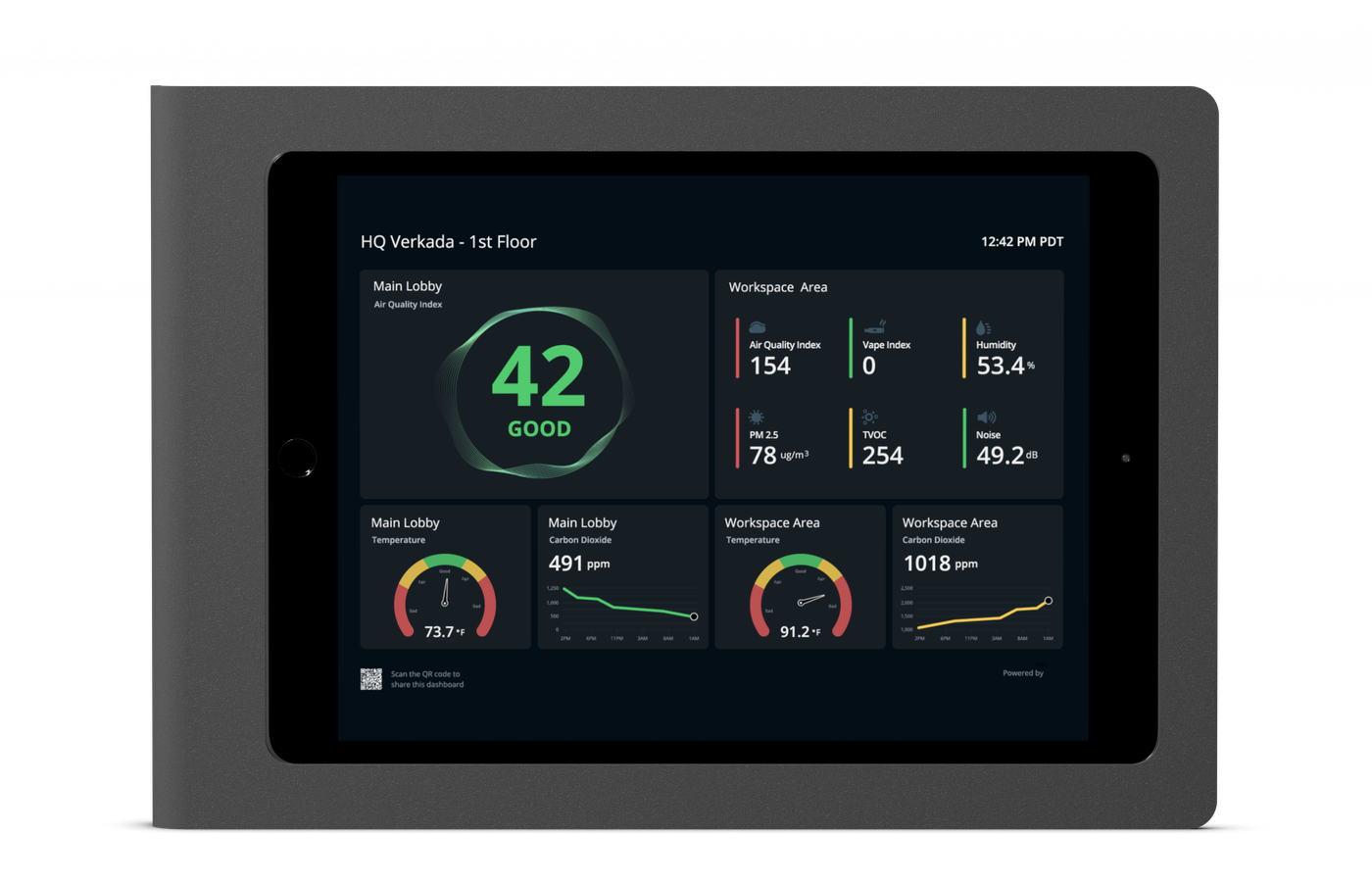
Quick answer: Vape sensors are the only practical way to catch vaping where it actually happens on a Hawaii campus — restrooms and locker rooms, where cameras can never go. A Verkada SV23 sensor mounts on a single PoE cable, detects vape aerosol and reads it as a vape index, and sends a time-stamped alert to a phone within seconds. Paired with a hallway camera, staff see who entered and left. The deterrence comes from consistency: once students learn the restroom responds every time, the behavior moves off campus.
Ask a Hawaii principal what takes up more of the vice principal's day than almost anything else, and restroom vaping is near the top of the list. The Hawaii Department of Health says plainly that vaping in schools and classrooms is commonplace — even in elementary schools — and that a teacher or parent may notice only a sweet odor when a student takes a puff. This guide covers what the current Hawaii data says, what the new state laws change, and how vape sensors work on a campus, from a locally owned Honolulu team that has supported Hawaii DOE schools since 2019.
How big is the vaping problem in Hawaii schools?
Smaller than its 2019 peak but still roughly one in eight high schoolers — and heavier on the neighbor islands. The 2023 Hawaii Youth Risk Behavior Survey found 13.2% of public high school students currently vape, down from 30.6% in 2019. The county split matters for schools outside Honolulu: about 22% of high school students in Hawaii County, 18% on Maui, and 16% on Kauai report current vaping, versus 13% in Honolulu County.
The students who do vape are vaping hard. According to the Department of Health, 46% of Hawaii high school students who vape do so every day, and nicotine in today's devices is measured in cigarette-packs per device. Only 2.5% of Hawaii youth who vape say they bought from a store; the rest get devices from friends or online, which is why supply-side rules alone don't empty the restrooms.
What do Hawaii's 2026 vape laws mean for schools?
They shrink the legal supply, but they don't change what happens in a restroom at 10:15 a.m. On July 7, 2026, Governor Green signed two bills: HB 1573 requires e-cigarette manufacturers to certify annually that their products hold an FDA marketing order, with the Attorney General publishing an approved-product directory and seizing everything else, and SB 2175 bans the sale of disposable e-cigarettes statewide starting January 1, 2027. No candy- or fruit-flavored device is FDA-authorized, so the flavored disposables students favor are the target.
For a campus, the practical effect is that the devices showing up in backpacks are increasingly illegal to sell in Hawaii — which strengthens a school's hand on consequences — but they'll still arrive by mail and by friend. Detection on campus is still the school's job.
How does a vape sensor actually detect vaping in a school restroom?
A Verkada vape sensor samples the air continuously, recognizes the chemical signature of vape aerosol, and pushes a vape-index alert to designated staff the moment a threshold is crossed. The SV23 is the model built for restrooms and locker rooms: ten readings on one PoE cable, including the vape index, TVOC, particulates, CO2, noise, and motion. There is no camera and no audio recording in the SV23, which is what makes it appropriate for a restroom in the first place. The SV25 adds carbon monoxide and formaldehyde for labs and shops, plus an optional audio-recording capability that should stay off in any privacy-sensitive space — USP configures it that way.
Two features do most of the work for a school. Tamper detection flags a student trying to cover or knock the sensor, which is usually the first thing they try. And noise monitoring — sound level, not recording — lets the same sensor catch a fight or shouting in a locker room, a common request from Hawaii administrators who've read about Verkada's fighting detection on cameras and want similar coverage where cameras can't go.
How do schools identify who was vaping if there's no camera?
By pairing the sensor alert with the hallway camera outside the restroom door. When the vape index spikes at 10:15:22, the alert links to footage from the nearest hallway camera, so an administrator sees who walked in a minute earlier and who walked out a minute later. That is the difference between "somebody was vaping in the B-building restroom" and a conversation with a specific student, with a time-stamped alert and video to back it up when a parent pushes back.
Because sensors and cloud security cameras live in the same Command platform, there's nothing to cross-reference by hand. The alert, the reading history, and the video are one click apart on the vice principal's phone, and every event is logged for the semester's pattern — which restroom, which period, which days.
Do vape sensors actually deter vaping, or just catch it?
Both, and deterrence is where the payoff is. The catch rate is highest in the first weeks; after that, alerts typically drop because students learn the restroom responds every time. That only works if the school is consistent: post signage that the restrooms are monitored for vaping, respond to alerts the same way each time, and follow through with the school's existing discipline and support steps. Schools that treat the first alerts as an education moment — connecting students to the state's free My Life, My Quit program for teens — tend to see the behavior fade rather than migrate.
Consistency also depends on where the alerts go. USP sets up alert routing so the right people get notified — the on-duty administrator, security, or the front office — by app notification and text, with schedules so nobody is paged at 2 a.m. for a maintenance crew.
What does a school vape-sensor deployment involve?
A campus walk, a sensor-by-sensor placement plan, and a proposal covering hardware and cloud licensing. USP surveys the restrooms, locker rooms, and any hallway camera coverage that pairs with each sensor, produces the design and specifications, and quotes Verkada hardware and Command licensing. Physical mounting and cabling are referred to licensed, low-voltage Hawaii contractor partners; once sensors are up, USP handles configuration, alert routing, staff training, and ongoing support. Sensors carry a 10-year warranty and run on the same platform as the campus's cameras, door access, and visitor management, so a school that already uses Verkada adds them without a new system to learn. Details on the full lineup are on our air quality and environmental sensors page, and our vape detectors for Hawaii schools page covers placement and deployment questions.
Frequently Asked Questions
Can schools put vape detectors in restrooms in Hawaii? Yes. Vape sensors contain no camera, and in the SV23 model no audio recording, so they don't raise the privacy concerns that cameras would in a restroom or locker room. Schools should post notice that restrooms are monitored for vaping, which also supports deterrence.
How fast does a vape sensor alert staff? Alerts typically reach designated staff within seconds of the vape index crossing the threshold, by mobile app notification, text, or email, with the reading history and any linked hallway camera footage attached.
Can a vape sensor tell the difference between vaping and body spray or steam? Verkada sensors read a dedicated vape index alongside TVOC, particulates, and humidity, which lets the platform distinguish vape aerosol from aerosol deodorant or shower steam far better than a single-reading detector. Thresholds are tuned per room during setup to keep false alerts low.
What happens if students cover or tamper with the sensor? The sensor reports tamper events as their own alert, so covering it, hitting it, or hanging something on it notifies staff just like a vape event does.
Do vape sensors work for schools on the neighbor islands? Yes. Because sensors are cloud-managed, a complex-area or district administrator can see readings and alerts from campuses on Maui, Kauai, or the Big Island the same way as on Oahu, and USP serves every island.