
Quick answer: The most effective way to protect a Hawaii construction site is a solar-powered LTE camera system with AI detection, paired with live remote monitoring that talks intruders down and dispatches police on verified threats. It goes live before temporary power does, costs a small fraction of a 24/7 guard post, and moves to the next site when the job wraps. Most losses happen between 10 p.m. and 5 a.m. on unlit, unmonitored sites — which is exactly the window this setup covers.
Job-site theft is a cost Hawaii contractors have mostly learned to eat: a generator gone Monday morning, copper stripped from a rough-in, a conex box pried open over a three-day weekend. On an island, every loss also carries a replacement delay measured in weeks of shipping, not days. This guide covers what's being stolen on Hawaii job sites, why island sites are harder to protect than mainland ones, and how to configure cameras and monitoring for any site size — from a locally owned Honolulu team that designs these systems, with deployment handled by licensed contractor partners.
How bad is construction site theft in Hawaii?
Bad enough that it's making the news and prompting county action. On April 1, 2026, a $32,000 Kubota skid-steer compact track loader was stolen from a construction site on School Street in Kalihi just after 4:30 a.m. — hitched to a truck that had itself been stolen in Waianae — and the whole thing was captured on surveillance video. On Maui, thefts of generators, tools, and building materials from Lahaina rebuild lots became common enough that Maui County began installing night-vision security cameras and restoring street lighting in the fire zones to deter it. With the Lahaina rebuild running for years to come, that pressure isn't going away.
Industry estimates put U.S. construction equipment theft in the hundreds of millions of dollars a year, with fewer than a quarter of stolen machines ever recovered. The pattern on Hawaii sites is predictable: skid-steers, mini excavators, and generators go on trailers overnight; tools disappear from unlocked trailers and open trucks; copper and plumbing stock walk off after rough-in; lumber and PV panels leave laydown yards on weekends. Almost all of it happens after crews leave, on sites with no lighting and no eyes.
The Kalihi footage points at the real lesson: the site had a camera, and it produced a clear recording. What it didn't have was anything that intervened while the theft was happening. Recording is evidence; deterrence is what keeps the machine on the lot.
Why are Hawaii job sites harder to secure than mainland sites?
Because most Hawaii sites have no power, no internet, and no quick replacement supply chain — and the environment is hard on hardware. On the mainland, a contractor can usually get a temporary power drop and a business internet line to a job trailer within days. Here, sites in Kapolei, Kihei, Waikoloa, or Lihue often run on generators for months, and there's no fiber to pull to a remote lot. Traditional camera systems that need an NVR, a network switch, and constant power simply can't go on those sites.
Then there's the salt air. Coastal and windward sites corrode unrated hardware fast, and a camera that fails in month four of an eighteen-month project is worse than no camera, because everyone assumes it's working. Look for IP66/IP67 and IK10 ratings — the same specs we recommend for Maui and neighbor-island businesses.
Logistics compound everything. A stolen generator on the mainland is a same-day replacement; in Hawaii it may be a two- to four-week wait, and every day the crew works around it is a schedule cost no insurance claim covers. Deterrence pays off more here than almost anywhere else.
What does a construction site security system look like in Hawaii?
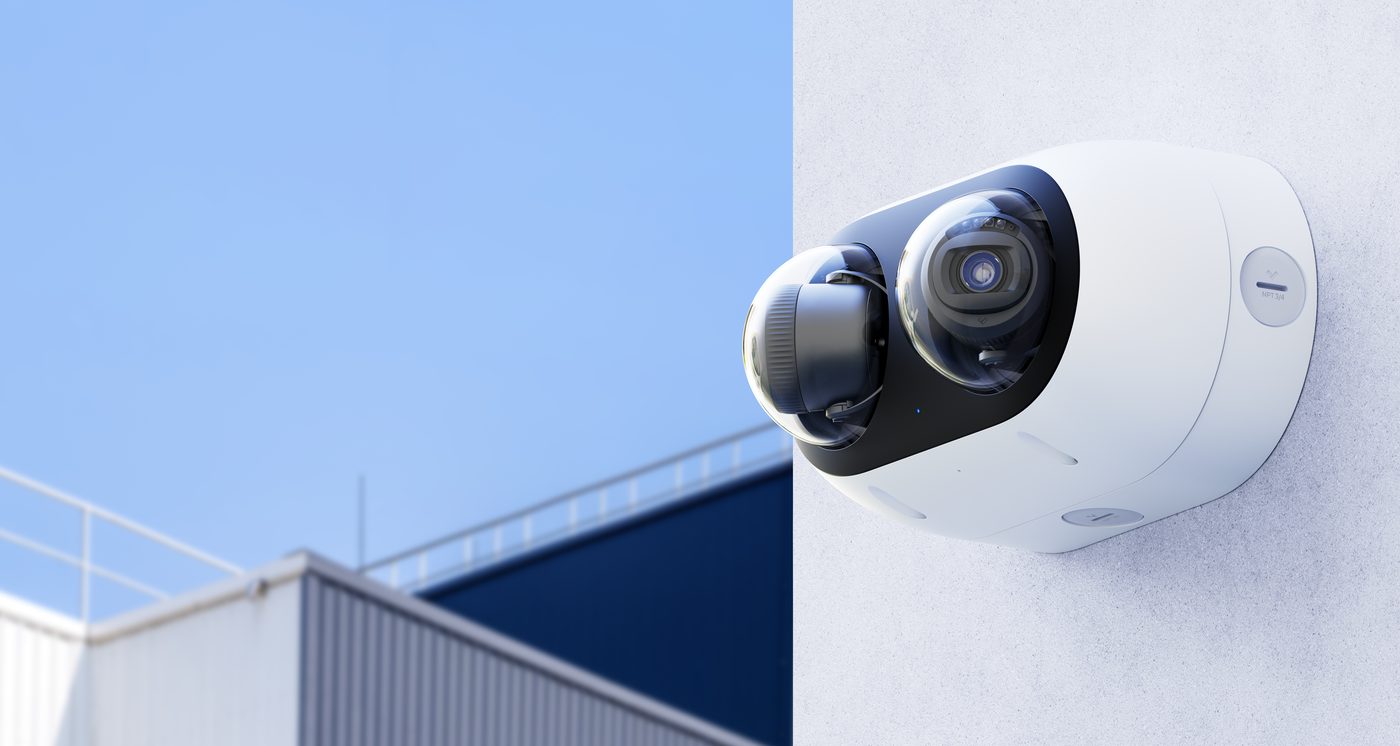
For most Hawaii job sites, the right system is one or more solar-powered LTE cameras with onboard storage, cloud management, and AI person and vehicle detection — no trenching, no trailer network, no NVR. The Verkada CR63-E is the model built for this: 4K resolution, dual-SIM LTE, a built-in backup battery, solar or DC power, onboard storage for 30–120 days of retention, and license-plate-reading mode for tracking vehicles at the gate. It's rated IP66/67 and IK10 for outdoor abuse and covered by a five-year warranty. Because it records at the edge and syncs to the cloud, a cellular hiccup doesn't lose footage — and the same unit doubles as post-storm coverage when a site loses power, as covered in our hurricane-season security checklist. See our remote LTE camera lineup for the full spec sheet.
A typical build-out by site size:
- Small site (single lot, house or small commercial): one or two LTE cameras on a pole or the fence line covering the gate, the equipment parking area, and the conex box, plus a talk-down speaker.
- Mid-size site (multi-building, laydown yard): three to six cameras — gate with LPR mode, laydown yard, trailer row, and material staging — with a horn speaker and strobe at the main approach.
- Large or multi-phase site: LTE cameras on the perimeter plus a cellular gateway that brings standard dome and bullet cameras online across the site, all visible in one dashboard alongside your other active jobs.
When the site gets permanent power, the cameras stay through finish work, then the LTE units move to your next job. A superintendent running four projects on two islands sees all of them from one phone.
Does live monitoring work on a job site without a guard?
Yes — and on an after-hours site, remote monitoring is usually more effective than a lone guard. When a camera detects a person in the fenced area after hours, AI analytics filter out headlights, dogs, and swaying palms, and a trained monitoring agent looks at live video. If it's a real intruder, the agent triggers a talk-down over the on-site speaker, addressing the person by clothing and location, fires the strobe, and escalates to police with live video in hand. Most trespassers leave the moment a voice names what they're wearing. That's the intervention the Kalihi site didn't have. For sites with a locked trailer or materials container, pairing the cameras with a video-verified business alarm system in Hawaii adds door and motion sensors that trigger the same response.
The cost comparison is stark. A 24/7 guard post in Hawaii runs roughly $18,000 to $29,000 a month at typical billed rates, while cameras plus professional monitoring typically lands in the hundreds to low thousands per month — the full math is in our guards vs. remote monitoring cost guide. A single prevented skid-steer theft covers the monitoring on a mid-size site for the life of the project. Learn more about how live video monitoring and deterrence works.
A guard still earns their keep for daytime traffic control and delivery check-in — the hybrid model is staffed days, monitored nights, which removes most of the guard bill while the site stays covered.
What else do job-site cameras pay for?
Beyond theft, a monitored camera system pays for itself in claims documentation, owner visibility, and insurance conversations. AI-searchable footage settles a worker-injury dispute, a damaged-delivery claim, or an OSHA question in minutes instead of a week of he-said-she-said. Owners, lenders, and mainland architects get live views and time-stamped progress documentation without booking a flight. And documented deterrence — lighting, cameras, monitoring, gated equipment storage — is exactly what builders-risk and inland-marine underwriters ask about at renewal, though premium credits vary by carrier.
For contractors bidding State, county, or DOE work, the same platform covers the permanent facility after turnover, so the security you design for the job can become the security you hand the owner. Our construction industry page covers the full recommended stack.
Frequently Asked Questions
How much does construction site security cost in Hawaii? For most Hawaii job sites, a solar LTE camera system plus live monitoring costs a small fraction of a staffed guard post — cameras are a one-time hardware purchase with a cloud license, and monitoring runs monthly in the hundreds to low thousands depending on camera count and hours. A single 24/7 guard post runs roughly $18,000–29,000 a month. USP provides a written design and proposal after a free site assessment.
Do job-site cameras need power or internet? No. Remote LTE cameras like the Verkada CR63-E run on solar or DC power with a built-in backup battery and connect over dual-SIM cellular, so they go live before temporary power or network reaches the site. Footage records onboard and syncs to the cloud.
Can the cameras move to my next project? Yes. Solar LTE cameras and cellular gateways are designed to redeploy — unbolt them at closeout and put them up at the next site, and they reappear in the same cloud dashboard under the new project.
Does the system work on neighbor islands like Maui and the Big Island? Yes. Because the cameras run over cellular and are managed in the cloud, a Honolulu-based superintendent can watch a Kihei or Waikoloa site the same way as one in Kapolei. USP serves every island, with deployment by licensed contractor partners on each.
Who installs construction site cameras in Hawaii? USP is not a licensed contractor. We handle the site assessment, system design, hardware and licensing proposal, monitoring configuration, and training, and refer physical mounting and cabling to licensed, low-voltage Hawaii contractor partners.
Will insurance give a discount for job-site cameras and monitoring? Sometimes. Builders-risk and equipment underwriters commonly ask about theft deterrence measures, and documented monitoring can help at renewal — but credits vary by carrier and policy, so ask your broker before counting on one.