
Quick answer: Cameras do not belong in a Hawaii school restroom or locker room, and the published surveillance guidelines at Hawaii DOE schools say exactly that. Vape sensors are different. They have no camera and record no audio, they only measure the air and the sound level, so they can go inside the restroom where the vaping happens. The approach that works is sensors inside, cameras in the hallway outside, and a documented alert routine that connects the two.
Every principal in Hawaii knows where the vaping happens. It is the restroom at the far end of the building, and no adult can stand in it all day. The first question we hear from schools is whether anything can be put in there at all, and the second is whether a sensor is just a camera with a different name. This guide answers both, lays out what vape detectors for Hawaii schools actually measure, and shows how the campuses we work with across the islands set them up. It is written for school leaders and the education teams who have to answer to parents, not for lawyers, so confirm anything that affects policy with your complex area office or counsel.
Are security cameras allowed in Hawaii school restrooms?
No. Hawaii DOE schools that publish video surveillance guidelines limit cameras to public areas where there is no expectation of privacy, such as entrances, hallways, cafeterias, building exteriors, parking lots and playing fields, and they specifically exclude restrooms, locker rooms, dressing rooms, classrooms and offices. The same guidelines generally say recordings are written over within 30 days unless an incident is under review. A principal's letter during the 2023 Keaau High School incident listed the same exclusions, and that episode is the cautionary tale: cameras mounted in a breezeway outside the restrooms captured a view into a stall, and the department moved them within days once parents raised it.
State law backs this up. Hawaii's privacy statutes make it a crime to use a recording device in a private place to observe someone who is undressed without consent, and violation of privacy in the first degree is a class C felony. A restroom is the textbook private place. Nobody in school leadership is going to sign off on a camera inside one, and they should not. This is a summary of public documents, not legal advice.
Why is a vape sensor allowed where a camera is not?
Because a vape sensor does not see or listen. Verkada's SV23 sensor measures the air in the room, including a dedicated vape index for e-cigarette aerosol, plus smoke and particulates, TVOCs, humidity and temperature, and it measures sound level as a number without recording audio. There is no lens, and the sound reading is a decibel level, not a recording. When the vape index crosses the threshold, the sensor sends an alert with a time and a room name. That is the whole output: a timestamp and a location, which is exactly what a vice principal needs and nothing a privacy policy objects to.
This is why vape detectors have spread through Hawaii campuses in the last two years. Public reporting has covered sensors in every restroom at Kihei Charter School on Maui and a 2025 rollout in the high school restrooms at Kamehameha Schools Hawaii in Keaau, both of them described as non-recording air sensors paired with hallway cameras. Neither is a USP project; we mention them because they show the model is already accepted here.
How do schools identify the student if there is no camera inside?
With the hallway camera and the clock. The restroom door is in a hallway or breezeway, and that is a public area where cameras are allowed. When the sensor alerts at 10:42, staff pull up the hallway camera at 10:40 to 10:45 and see who went in and out. In Verkada Command the sensor and the nearest camera can be linked, so the alert opens with the matching video clip already attached instead of someone scrubbing an hour of footage. Schools that still run a mix of older cameras can bring them into the same dashboard, which our guide to security cameras for Hawaii businesses and schools covers in more detail.
The point is not to catch every student. It is to make the restroom stop being anonymous. Our post on vape sensors in Hawaii schools covers the youth vaping numbers and the 2026 law changes; the pattern schools report is a sharp drop in alerts after the first few weeks, even though nothing in the restroom is watching anyone.
What should a Hawaii school write into its policy before the sensors go in?
Four things, and they take an afternoon. First, a notice to families and students that air quality and vape sensors are in use in restrooms and locker rooms, with a plain statement that they do not record video or audio. Second, who receives alerts and in what order, usually the vice principal and the campus security attendant first, with a backup when they are off campus. Third, what happens on an alert, from a hallway check within minutes to how the hallway video is reviewed and who may see it. Fourth, how long alert logs are kept, which can mirror the 30-day retention most schools already use for video.
The reason this matters is consistency. A sensor that alerts to a phone nobody checks after lunch teaches students the opposite lesson. Schools that route alerts to the people who can actually walk to the restroom, and that respond the same way every time, are the ones where the alert count falls.
Where do sensors and cameras go on an open-air Hawaii campus?
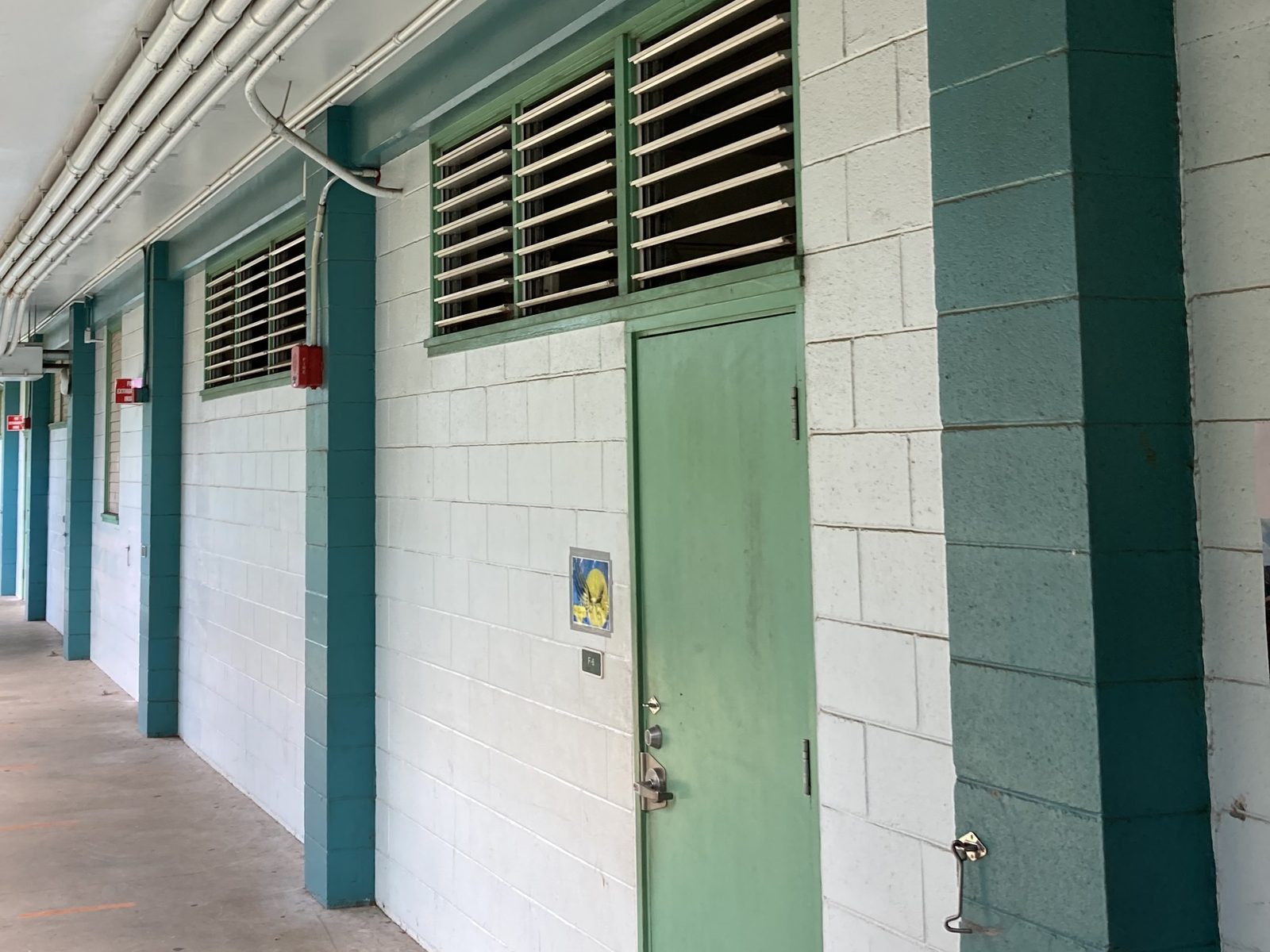
Sensors go inside the enclosed restrooms and locker rooms, typically one per room, mounted high and away from the door so the draft from a louvered window does not wash out a reading. Cameras stay in the breezeway or hallway with a clear view of the restroom door and nothing past it, which is the exact lesson from Keaau. On campuses from Honolulu to Hilo most restrooms open onto a covered breezeway rather than an indoor hall, so the camera placement and the field of view get walked and checked in person, not guessed from a floor plan.
A typical first phase is the restrooms with the most complaints, usually four to eight sensors, with the hallway cameras already in place or added at the same time. USP does the walk-through with your administrators, the placement plan, the alert routing and the Command setup; mounting and cabling are performed by licensed Hawaii contractor partners. Schools on Oahu are a short drive from our Honolulu team, and we support the neighbor islands the same way. Learn more about vape sensors in Hawaii and what a school project involves.
Frequently Asked Questions
Can a Hawaii public school put a camera inside a restroom or locker room? No. The surveillance guidelines published by Hawaii DOE schools exclude restrooms, locker rooms, dressing rooms, classrooms and offices, and state privacy law makes recording someone undressed in a private place a felony. Cameras stay in hallways, breezeways and other public areas.
Does a vape sensor record audio or video? No. The Verkada SV23 has no camera and does not record audio. It measures air quality, including a vape index, and reports the sound level as a number, then sends an alert with the time and room.
How does the school know who was vaping if the sensor cannot see? Staff match the alert time to the hallway or breezeway camera outside the restroom door. In Verkada Command the sensor and the nearest camera can be linked so the alert arrives with the matching clip.
Do vape sensors work in Hawaii's open-air school buildings? Yes, inside enclosed restrooms and locker rooms. Placement away from louvered windows and threshold tuning for trade-wind airflow keep readings reliable, which is part of the site walk.
Should parents be notified before sensors are added? We recommend it, and most Hawaii schools do. A short notice that the sensors measure air and sound level only, with no video or audio recording, heads off the confusion that cameras caused at Keaau in 2023.